🏠 Home After 18 Days in Space
Lucknow / Houston, July 2025 – Group Captain Shubhanshu Shukla has safely returned to Earth after an 18-day mission aboard the International Space Station (ISS), marking a historic moment as India’s first astronaut to reside on the ISS and the second Indian in space.
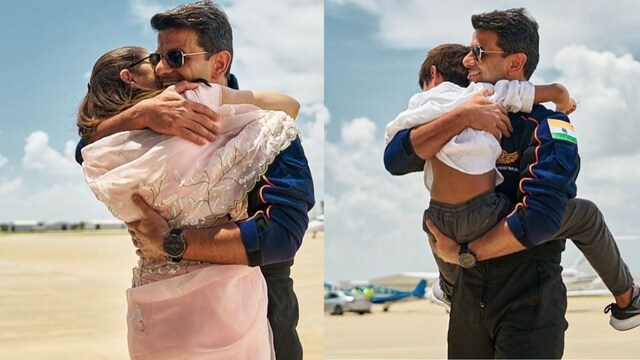
🔥 A Warm Family Welcome
- Kamna is planning a quiet, heartfelt celebration—no public fanfare, but soothing home-cooked meals and quality family time.
- She reflected: “Receiving his call from the ISS right after docking was an unexpected and wonderful surprise”
🎉 National and Family Pride
- Back in Lucknow, his family celebrated with prayers, cake-cutting, and heartfelt moments at the City Montessori School.
- His mother said she’ll celebrate by cooking his favorite dishes, while the nation lauds this step for India’s space journey.
Scientific research and cargo returned with crew
Mission & Return
- On July 15, 2025, Shubhanshu Shukla landed off the California coast aboard SpaceX’s Dragon spacecraft after 18 days on the ISS.
- The return journey lasted about 22.5 hours, including over 310 orbits and a trek of ~1.3 crore km
Scientific Cargo & Equipment
The capsule delivered more than 580 lb (≈ 260 kg) of research cargo.
This included NASA hardware, scientific instruments, and research data from over 60 experiments conducted by a team of 31 nations
ISRO-Designed Experiments by Shukla
- During his mission, Shukla conducted 7 cutting-edge ISRO experiments — exploring muscle loss, brain function, algae, and even seed growth in space.
Houston / Lucknow, July 2025 – Group Captain Shubhanshu Shukla, the first Indian astronaut to live on the International Space Station (ISS), successfully conducted seven key experiments designed by ISRO (Indian Space Research Organisation) during his 18-day mission. These experiments are crucial for India’s upcoming Gaganyaan human spaceflight mission, expected in 2027.
🧪 List of ISRO-Designed Experiments by Shubhanshu Shukla
| Experiment | Use in Space | Use on Earth |
|---|---|---|
| Muscle Loss | Astronauts की health | बुजुर्ग और बीमारों में muscle degeneration |
| Plant Growth | Space में खेती | खाद्य सुरक्षा और desert/agriculture tech |
| Tardigrade | Deep space biology | Extreme survival genes research |
| Microalgae | Oxygen & food recycle | Algae farming, bioplastics |
| Brain-Machine | Space robotics | Prosthetics, brain-controlled devices |
| Fluid Dynamics | Space engine design | Pharma & fuel tech |
| Cognition/Stress | Mental safety | Workplace stress, pilot training |
🗣️ Shubhanshu Shukla said..
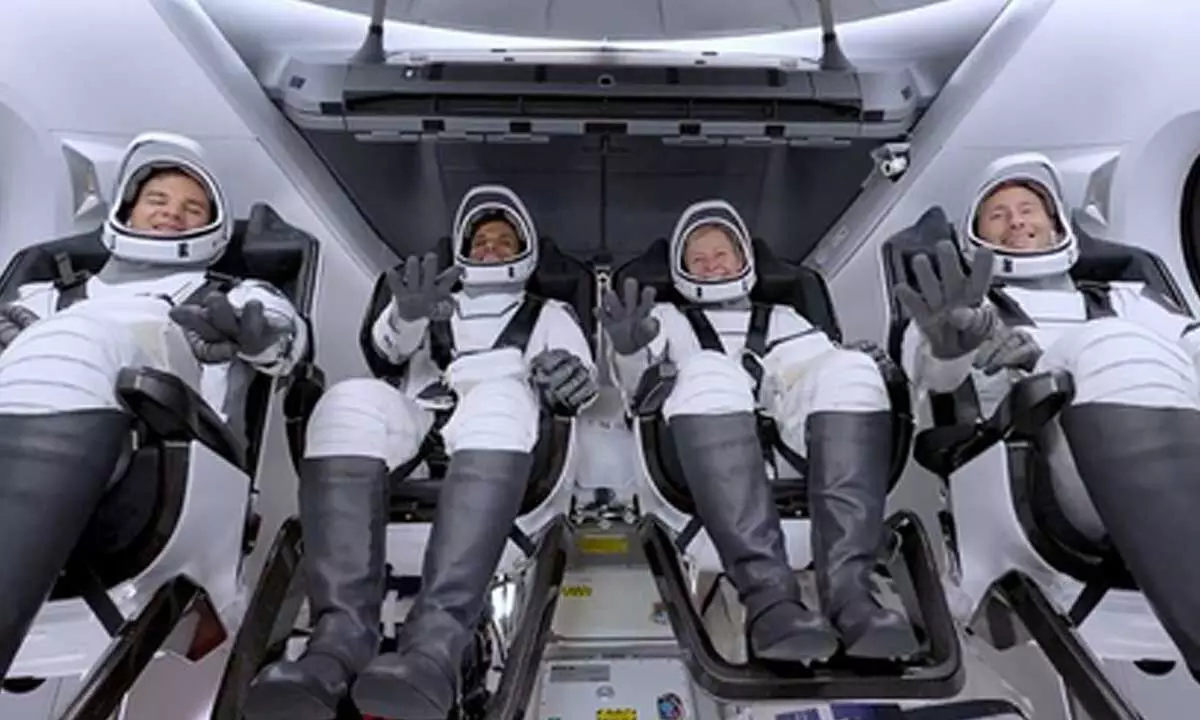
“This was not just my mission—it was India’s mission. These experiments will help our scientists and future astronauts go further, safely and smarter.”
🛰️ India’s First Live Human-Led Space Lab: Shubhanshu Shukla’s Historic Mission
Group Captain Shubhanshu Shukla became the first Indian to personally conduct seven ISRO-designed scientific experiments aboard the International Space Station (ISS). From growing moong dal seeds to studying muscle loss in zero gravity, his mission was not just a spaceflight—it was a flying Indian laboratory, paving the way for India’s future space missions like Gaganyaan. These experiments will help scientists understand how biology, plants, and fluids behave in space, with benefits both in orbit and back on Earth.
🌌 A New Chapter in Indian Space Science Begins with Shubhanshu Shukla
Shubhanshu Shukla’s 18-day journey aboard the ISS marked a groundbreaking moment for India. For the first time, an Indian astronaut directly carried out experiments designed by ISRO, transforming the ISS into a mini Indian space lab. His work explored muscle degeneration, plant growth, stress response, and algae development in microgravity. This mission not only showcased India’s scientific strength but also laid the foundation for human-centric space research. The data gathered will support ISRO’s upcoming Gaganyaan mission and has the potential to benefit health, agriculture, and technology research on Earth
🚀 From Lucknow to Low Earth Orbit: Shubhanshu Shukla’s Scientific Journey
Born and raised in Triveni Nagar, Lucknow, Shubhanshu Shukla’s journey from a quiet neighborhood to outer space is nothing short of inspiring. As he conducted India’s first set of live space experiments aboard the ISS, his hometown celebrated his achievement with pride. From handling delicate scientific tools in orbit to inspiring students back home, Shukla bridged the gap between Earth and space, showing that dreams from small towns can truly reach the stars.
🔬 India’s Science Meets Space: A Mission Beyond the Stars
Shubhanshu Shukla’s mission was more than just space travel — it was a moment of scientific pride for India. As he floated in microgravity, he carefully conducted experiments that tested how life behaves without gravity — from the growth of moong seeds to the survival of tardigrades, from the performance of brain signals to the shrinking of muscle cells. Each result carries meaning not just for astronauts, but for students, doctors, and scientists back home. With every test tube and timer, Shukla brought Indian innovation one step closer to the Moon, Mars, and beyond.
🌱 Experiments That Connect Space with Earth
The significance of Shubhanshu Shukla’s work goes far beyond the walls of the ISS. His experiments have real-world impact — the microalgae studied in space may one day help produce oxygen on future Moon or Mars bases, and also treat pollution here on Earth. The muscle loss data could lead to better therapies for aging or bedridden patients. Even the sprouted moong dal seeds give hope for farming in space, ensuring astronauts can grow food during long missions. Through his hands-on effort, India has shown that space science can solve Earth’s problems too.
🏁 Conclusion: A Scientific Step for India, A Giant Leap for the Future
Shubhanshu Shukla’s space journey is not just a personal milestone but a national moment of pride. His contribution has opened doors for Indian-designed experiments to flourish in microgravity, offering valuable data that will aid ISRO’s future missions like Gaganyaan. By turning space into a science lab, Shukla has shown that with preparation, precision, and passion, India is ready to lead in human space exploration. His mission will serve as a guidebook for future astronauts and a source of inspiration for students across the country.
Quick Facts from the Mission
🎯 Goal: Support India’s first human spaceflight mission, Gaganyaan (launch by 2027)
👨🚀 Astronaut: Group Captain Shubhanshu Shukla
🔬 Total Experiments: 7 (ISRO-designed)
🛰️ Mission Duration: 18 days aboard ISS
🌿 Focus Areas:
• Muscle Loss
• Moong Seed Germination
• Microalgae Growth
• Tardigrade Survival
• Fluid Behavior
• Cognitive Stress
• Brain-Machine Interface
About The Author